
Chinese Canadians Organize For Democratic Rights and Against Modern Exclusion
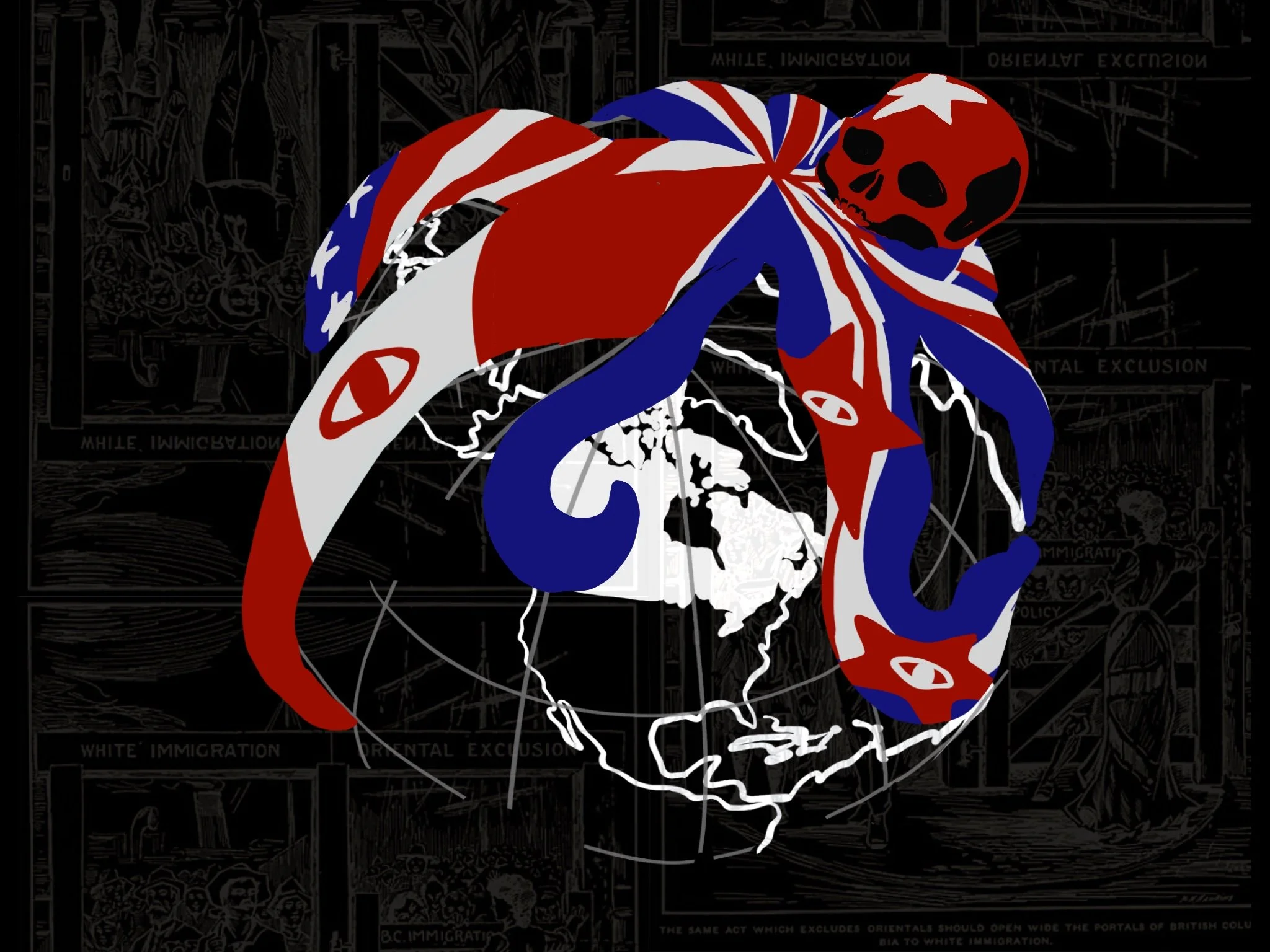
Editor’s note:
Qiao Collective is pleased to publish the following original essay by Chinese Canadian comrades William Dere and Wawa Li.
The essay provides an in-depth investigation of Canada’s alignment with the US New Cold War on China and its ripple effects for Chinese diaspora communities. Drawing on the history of Canadian exclusion, the authors outline how a renewed Yellow Peril discourse has targeted Chinese Canadians with state repression, investigation, and silencing under the guise of rooting out “foreign influence.”
Though Prime Minister Mark Carney's much-vaunted visit to Beijing and seeming repudiation of the US-led “rules-based international order” indicates the potential for warming China-Canada ties, Dere and Li remind us of the constitutive role that Sinophobia has played in Canadian politics for over a century. These deep-seated legacies of racism, state violence, and imperial alignment must be rooted out if Canada is to truly chart an independent course from US hegemony.
“What kind of spirit is this that makes a foreigner selflessly adopt the cause of the Chinese people's liberation as his own? It is the spirit of internationalism, the spirit of communism, from which every Chinese Communist must learn.”
— Mao Zedong, In Memory of Norman Bethune
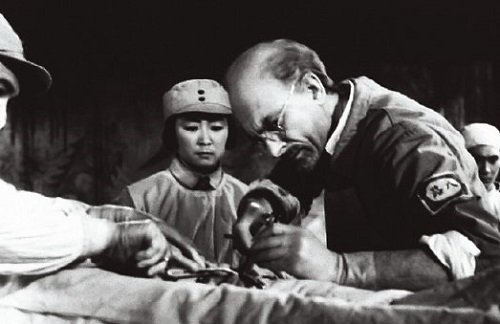
By invoking the spirit of Dr. Norman Bethune, we ground ourselves in the principle of internationalism as a path toward collective liberation. As Chinese Canadian anti-imperialists, we seek to revive the history of solidarity between Chinese and Canadian peoples, and with our American comrades by recognizing the shared histories and transnational consequences of imperial policies. Bethune (1890–1939), a member of the Communist Party of Canada and a pioneer of socialized medicine, remains a powerful symbol of Canada’s forgotten legacy of internationalist struggle. His revolutionary commitment reminds us that internationalism in the global struggle for justice and peace transcends humanitarianism.
At a time when modern forms of state violence are once again being enacted against the Chinese Canadian diaspora, we turn our attention to these processes as they unfold across national borders. Whether through coordinated surveillance regimes, or through patterns of racialized repression, we see clearly that what happens in one imperial core is often mirrored and reinforced in another. Canada, as an imperialist country, coordinates its international policy with transnational institutions like Five-Eyes, Western economic grouping G-7 and NATO. At a time when Trump is waging an economic war and threatening to annex Canada, the Canadian military integrates itself with the US hegemon.
This essay brings a transnational perspective to this moment, situating Canada within a broader historical pattern of settler-colonial and imperial complicity. Canada’s policies are not isolated; they are deeply entangled with global systems of imperialist exploitation, and oppression that impact racialized and marginalized communities at home and abroad.
1. For the first time in centuries, Western, economic, cultural, and moral supremacy is being challenged from the East.
The era of mutually beneficial engagement with China ended after the capitalist financial crisis in 2008, which led to President Obama’s “pivot to Asia” and a policy of containment towards China.
The West, especially the US, found a ready-made scapegoat in China for the economic downturn after the financial upheaval. The common discourse is that the Chinese stubbornly maintained their “authoritarian” system and refused to accept capitalist democracy after decades of tutelage by the West. Stereotypical accusations targeting China started in earnest: corruption, world’s worst polluter, theft of industrial and intellectual property, currency manipulator, unfair trade, laying debt-traps in the Global South, the ever-present topic of human rights in Tibet, Xinjiang, Hong Kong, and ultimately the quest for world domination. Sinophobia and Yellow Peril 2.0 were resurrected. Even though these accusations are designed to isolate and destabilize China on the world stage, China steadfastly maintains its socialist system and demonstrates the contrast between a pro-people society and the rapacious capitalist system of the West.
Following in the footsteps of the United States, is Canada-wide fearmongering shaping a political culture of scapegoating for electoral and policy failures? The easily identifiable scapegoats of the past—Chinese and Asian immigrants—are conveniently singled out today. As W.E.B. Du Bois (1926) wrote, “Beginning of Hate is Fear.” Anti-Asian hate is a direct result of yellow peril fear and Sinophobia.
2. Yellow Perilism, Canada’s racist legacy against Chinese people.
Yellow Peril: “The power or alleged power of Asiatic peoples, esp. the Chinese, to threaten or destroy the supremacy of White or Western civilization.”
— Collins English Dictionary – Complete & Unabridged 2012 Digital Edition
The term “yellow peril” is attributed to Kaiser Wilhelm II, the 19th century German militarist and imperialist who advocated the conquest and carving up of China. This Euro-supremacist thinking led to the invasion of China by the Eight-Nation Alliance in 1900 to suppress the Boxer Rebellion and resulted in the sacking of Beijing. The composition of the Eight-Nation Alliance (Germany, Japan, Russia, Britain, France, United States, Italy, and Austria-Hungary) bears a striking resemblance to the membership of the present day G7 countries (Germany, Japan, United Kingdom, France, United States, Italy, and Canada).
The concept of yellow peril existed before the Kaiser, when British drug lords prepared public opinion to wage two Opium Wars (1839-42, 1856-60) against a weak China, resulting in 150 years of colonial occupation of Hong Kong. As in most justifications for war and invasion, the British painted the subjugated Chinese “hordes” in the most odious manner possible and stoked fear and hate among the European population. Historically, the West used the construct of yellow peril as a geopolitical raison d’etre to dominate the East.
There is a paradox of being Chinese in Canada. One hundred and fifty years ago, Chinese immigrants came to help with nation building by constructing the railway. They were met with hostility and exclusion. This is the enigma of Canada: the Chinese came as part of the nation building project and yet racist laws lasting 62 years were passed to exclude them from Canadian society. The overwhelming sentiments of the yellow peril – weak and powerless China, “heathen” Chinese laborers competing for the limited number of jobs and the general prejudice against the “yellow hordes”—caused the vile policies to restrict Chinese entry into Canada to go unrestrained.
When the Exclusion Act was lifted in 1947, there were periods of welcome, family reunification and independent immigration as laborers, entrepreneurs, and professionals. Many Chinese Canadians continue to cling to the Canadian dream. Yet, today, they are once again targets of exclusion with accusations of disloyalty. Historical images of the Yellow Peril are now mixed with the Red Scare. The perception is that our ancestral homeland has become a menace to democracy, security, and the Western way of life.
Yellow peril thinking continues to shape the Western obsession with China as the challenge to Western dominance in social, economic, and political spheres. This obsession cannot help but have an impact on the daily lives of Chinese Canadians, casting doubt on their belonging to this country. Ignorance of the history of Chinese Canada, especially of the Chinese Exclusion Act, leaves today’s public a blank slate ready to absorb narratives of fear and suspicion towards a rising China. Canada’s mainstream media and political parties all sing from the same hymnbook when it comes to foreign and economic relations with China. The 5 major Canadian parties - Liberal, Conservative, New Democratic Party, Bloc Quebecois, and Green Party are united in demonizing China and using it as the scapegoat for their social and foreign policy failures, e.g., rising prices due to anti-China trade policies (100% tariffs on Chinese EV’s vs rapeseed exports to China) and increasing repression and exclusion of diaspora communities due to the mythic fear of foreign (Chinese) interference.
3. Canada’s Indo-Pacific Policy and the Containment of China
In 2022, the Canadian government launched Canada's Indo-Pacific Policy (IPP). This policy makes an enemy of China and sees the country as a strategic challenge and labels it "an increasingly disruptive global power." The policy sets out a framework to"decouple” from China.
This process began with the ban on Huawei, the telecommunications giant. The origins of the IPP go back to 2018, when the Five Eyes intelligence alliance met in Halifax. During that meeting, members discussed plans to coordinate action against Huawei, then the world leader in 5G/6G technology. The Anglo-American Five-Eyes network of Canada, UK, Australia, New Zealand and the US moves to ban Huawei due to so-called national security fears (in reality, fears of economic and technological competition). Australia is the first to enact the ban in August.
In December, at the request of the US, Canada arrested Huawei CFO, Meng Wanzhou at Vancouver airport during a transit stop on her way to Mexico. Meng was placed under house arrest for three years until the US dropped all charges in 2021.
Canadians Michael Spavor and Michael Kovrig were arrested and charged with spying by China shortly after Meng’s arrest. Both Spavor and Kovrig were released at the same time as Meng. Despite denials by Canada, Spavor’s lawsuit against the government admitted that he unwittingly provided information on North Korea to Kovrig who in turn gave it to the Canadian intelligence. Canada admitted as such when it settled the lawsuit with Spavor for $7 million.
The IPP follows the US in treating Beijing as a hostile competitor. This quote from the policy frames the stance of the country regarding China with antagonism:
“China has benefitted from the rules-based international order to grow and prosper, but it is now actively seeking to reinterpret these rules to gain greater advantage. China’s assertive pursuit of its economic and security interests, advancement of unilateral claims, foreign interference and increasing coercive treatment of other countries and economies have significant implications in the region, Canada and around the world.”
The Indo-Pacific policy belligerently allocated $500 million in military spending in the region. The number of Canadian frigates assigned to the waters off the Chinese coast will increase from 2 to 3. China considers sailings through the Taiwan Strait to be provocations and in violation of its territorial sovereignty but Canada routinely sails there alongside US warships. Canadian foreign policy is in lockstep with the US in its hegemonic design to threaten and contain China.
4. The state manufacturing of a modern Chinese exclusion
The current state of exclusion should be understood in a larger history of anti-Chinese sentiment that has been present since the beginning of Canada. Anti-Chinese sentiment has resulted in discriminatory policies since the building of the country. To enable such policies, a manufactured anti-Chinese sentiment was necessary.
The modern yellow peril thinking has real-life impact on Chinese Canadians. Canada's undying fixation on Chinese interference is implanted in the public imagination and racialized. As the state, media, and general public doubled down on inquisitions—both state-led and public attitude into the Chinese diaspora communities, the brunt of the stigmatization and legal weight is felt by community members.
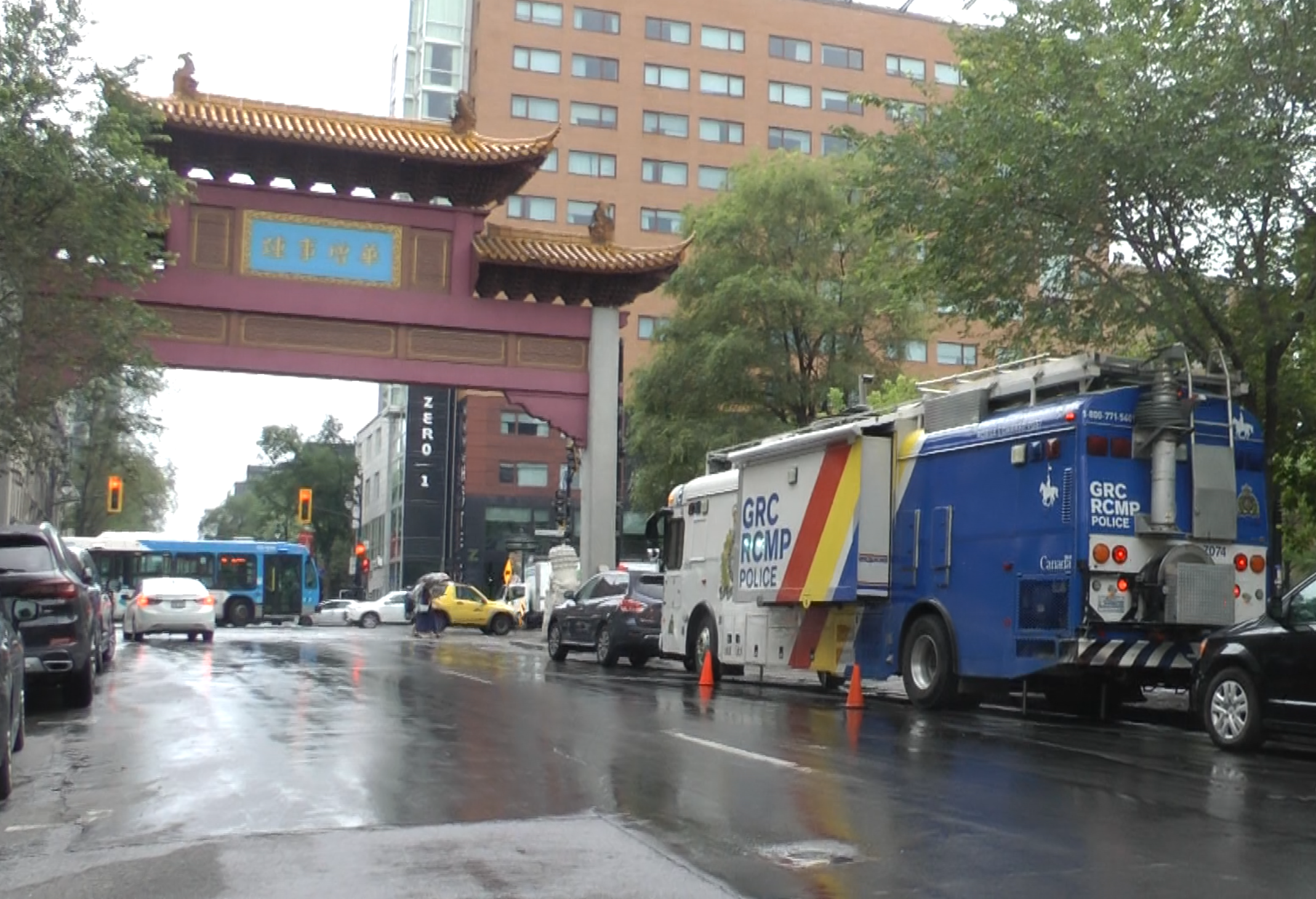
Contemporary Chinese exclusion is rooted in Canadian law and political systems. Multiple public inquiries, such as the 16-month Public Inquiry on Foreign Interference (PIFI) concluded that while concerns about Chinese interference were widespread, no concrete evidence of “traitors” was found. Despite this, the report still called for increased resources to address interference by countries like China. The outcome of the narrative manufactured by the final report, and throughout the inquiry about foreign interference, which has been weaponized by media, law enforcement, and opportunistic political forces, ultimately can serve as a tool for domestic repression that unfairly targets the Chinese Canadian community. An example is the Royal Canadian Mounted Police’s (RCMP) raid in July 2024 in Montreal’s Chinatown, where law enforcement officers were conducting an operation in every business of the neighbourhood on foreign interference” here to warn the merchants about “Chinese interference.” The following day, mainstream media released coverage portraying the raid as a public safety measure. Reports described RCMP officers going door-to-door to “warn” merchants about foreign interference and distributing cards with QR codes and contact information for reporting alleged harassment from the Chinese Communist Party (CPC).
In the meantime, under the shadow of institutional investigations and mainstream speculation, the lives of diaspora members are placed under suspicion. Numerous cases echo a McCarthyite pattern of witch-hunts. An ongoing case is that of Dr. Yuesheng Wang, a former Hydro-Québec battery researcher, who was the first in Canada charged with economic espionage under the Security of Information Act in 2022, accused of sharing information with Chinese institutions. Though no conviction has been made, he lost his job and faces ongoing legal and personal fallout; receiving little support from civil liberties or human rights groups. The prosecution is playing into the anti-China sentiments by linking Dr Wang and China as “stealing technology.”
A recent report highlights further academic repression: a survey by York University researcher Dr. Qiang Zha found that 40 percent of Chinese Canadian academics familiar with CSIS guidelines feel “considerable fear and/or anxiety” at being surveilled by the Canadian government. More academics and scientists such as Quentin Huang, Yentai Gan, Ishiang Shih, Dr. Xiangguo Qiu and her husband Keding Cheng are all individuals that have all been targets for exclusion or arrest without resulting in any convictions.
At the community level, service centers and institutions that have long served as lifelines to the community in places across Canada have also been targeted. One of the most egregious examples is the case of the so-called “Chinese police stations”. Relying on vague “intelligence” from a Spanish non-governmental organization, the RCMP publicly named several Chinese community social services and newly arrived immigrant regional organizations in Vancouver, Toronto, and Montreal as suspected hosts of these alleged stations. The police targeted two Quebec organizations, the 50-year old Chinese Family Service of Greater Montreal and its sister organization, Centre Sino-Québec de la Rive Sud. Both organizations provide services to the community such as immigration settlement, job search, family services, translation and French classes to integrate immigrants to Quebec. The consequences were immediate, leaving the community struggling with dragged out investigations that resulted in stigmatization, public suspicion, and disruption of essential services due to its sudden defunding from all levels of government.
The community organizations learned about the conclusion of the RCMP investigation through mainstream media on September 25, 2025, the same way they first heard about the investigation more than two years ago. The RCMP announced that no charges would be laid.
The RCMP failed to produce any evidence to support their allegations of harassment of community members by agents of the Communist Party of China. Despite the conclusion of the investigation, the community still faces financial burdens, reputational damage, and lingering distrust and fear that have not disappeared.
In March 2024, these two Chinese Canadian organizations filed a $5 million lawsuit against the RCMP. Despite police delays, the case is scheduled to go to court in November.
5. Chinese Interference in Canada and the Foreign Agent Registry
Just as the Head Tax and Chinese Exclusion Act once barred Chinese Canadians from full participation in political life, today’s politics of exclusion invokes the spectre of Chinese interference and alleged “agents” infiltrating Canadian society.
In September 2023, the Canadian government launched the Public Inquiry into Foreign Interference (PIFI) concentrating on Chinese interference into the 2019 and 2021 federal elections. The last time the government had a public inquiry on the Chinese community was the 1885 Royal Commission on Chinese Immigration. That inquiry did not end well for Chinese immigrants as it resulted in the Chinese Head Tax of up to $500 to enter Canada, leading to the total exclusion with the Chinese Exclusion Act of 1923.
PIFI concluded that foreign interference into the two general elections was inconsequential however, the Inquiry opened the flood gates for all kinds of accusations against Chinese Canadian politicians like Han Dong (Member of Parliament) and Michael Chan (former Ontario provincial cabinet minister) and Chinese Canadian voting patterns. There is a chill on Chinese Canadians trying to fully participate in the political process and even how they cast their ballots for fear of being accused of being agents of China. The 16-month public inquiry led to the stigmatization and racial profiling of Chinese Canadians in the political process and to the passing of the law to register “foreign agents.”
In June 2024, the House of Commons quickly passed Bill C-70, legislation aimed at countering foreign interference. The bill introduces a registry with sweeping definitions of associations with foreign entities, imposing extreme penalties such as life imprisonment. This registry echoes historical precedents such as the Chinese Exclusion Act (1923–1947), which mandated government registration solely for people of Chinese descent.
Current state policies also mirror post-9/11 strategies from the War on Terror. They reveal the ongoing entanglement of state power with the carceral system in sustaining a colonial capitalist order rooted in the surveillance, control, and exploitation of marginalized populations. As in the United States, Canadian intelligence agencies, police forces, and prisons operate in concert under the banner of “law and order,” a phrase often used to justify racialized state control.
We continue to live with the legacy of anti-Muslim legislation like Bill C-51, passed in 2015, which dramatically expanded the authority of intelligence and law enforcement agencies. It allowed broad information sharing across departments and gave the Canadian Security Intelligence Service - CSIS the power to “disrupt” perceived threats, not merely investigate them. Marketed as an anti-terrorism measure, Bill C-51 has been widely condemned for legitimizing racialized surveillance—particularly targeting Muslim and other marginalized communities. The same tools of suspicion, registration, and broad security powers once weaponized against Muslims are now repurposed against Chinese communities, showing how racialized surveillance migrates across targeted groups while preserving the same structures of control. Its vague definitions of “security threats” paved the way for unchecked state overreach and normalized systemic repression in the name of national security.
Historically and today, these mechanisms disproportionately target racialized communities. Despite community resistance, the Canadian state continues to mobilize its full apparatus to monitor and suppress Chinese Canadian communities. To name a few examples: Global Affairs Canada advances its Indo-Pacific Strategy with a securitized view of China; Public Safety and Justice departments focus on “Chinese interference” and promote the Foreign Agent Registry; The Department of Canadian Heritage has financed the development of programs (e.g., “Kill Chain”) to infiltrate, surveil, and disrupt Chinese community organizations and individuals.
6. Conclusion: Forces in Play inside and outside the Chinese Canadian Community
Despite the weight of institutional repression, both progressive and reactionary forces are shaping the struggle within and beyond the Chinese Canadian (CC) community.
Some individuals within the community align with imperial and colonial agendas, such as Hong Kong exiles, members of the “human rights industry,” and activists promoting separatism for Uyghurs, Tibetans, Hong Kong, and Taiwan. Many were set up and financed by the National Endowment for Democracy. Others on the establishment left, under the guise of opposing “authoritarianism,” reinforce narratives that fragment collective unity and serve the interests of the dominant order. These ideologies are aided and abetted by politicians across the spectrum and the mainstream media who couldn’t even say genocide in Gaza.
At the individual level, it is essential to dismantle the internalized “model minority” identity, a long-standing tool of racial discipline that rewards assimilation and political silence while punishing dissent. In the modern exclusion era, a new state-sponsored model minority myth has re-emerged in public rhetoric. The new “model minority” are the ones who have assimilated the majority Canadian ideology and they are the ones asked to testify in public and Parliamentary inquiries and sought after for interviews by the media. If you do not have the “correct” political thought, you are excluded from the political process.
In the context of current struggles, the model minority myth hinders solidarity and obscures the systemic nature of oppression. Government institutions and media recognize the good and compliant Chinese while shunning the bad Chinese who dare question the anti-China narrative and demand democratic rights and freedoms, as they invite the compliant ones to speak at Parliamentary committees and media interviews to support the “China Threat” perspective.
From outside the community, powerful forces committed to preserving the Western imperial system view China, and, by extension, Chinese diaspora communities, as threats. This
perspective drives policies and discourse that divide, surveil, and delegitimize Chinese Canadians, casting suspicion over their political loyalties and right to belong. Egregious examples are candidates that ran in the last general elections where Chinese Canadian candidates are closely examined for their association with pro-China community groups and their views on Canada China relations. As a direct attack on the democratic process, those who voted for these candidates are placed under a cloud of suspicion as being agents of China. Even those in the left establishment use the trope of “authoritarian and repressive” China to stand on the sidelines and cheer the repression against the community, or at least remain silent.
Yet, alongside these divisive forces, there are also unifying ones. Members and organizations within the community are realizing how McCarthyite Sinophobia is directly affecting their rights to organize and fight back. Allies beyond the Chinese Canadian community are beginning to be conscious of our struggle and stand in solidarity with our pursuit of civil and democratic rights. Within the community, organizations and individuals continue to resist systemic racism and national oppression. These include Chinese Family Services of Greater Montreal (CFSGM), the Progressive Chinese of Quebec, Yellow Pearl Collective (Montreal), Canada China Friendship Promotion Association, Senator Yuen Pau Woo, and lo wah kiel (Cantonese for “old timers”) organizations like the 150 year old Chinese Benevolent Association. Senator Woo’s public advocacy and the recent formation of his new organization Canadians United Against Modern Exclusion (CUAME) represent significant efforts to push back against racial profiling and promote principled dialogue and justice. Slowly, as we are under attack, the community is forming a broad united front as a natural outcome of the increasing repression from the Canadian state.
In this chaotic terrain of vision shaped by state-driven strategies , we are reminded to think dialectically. Progress emerges from contradiction and struggle; tensions from which positive resolutions and new forms of unity ought to emerge. As Canadian policies increasingly mirror and align with U.S. strategies, we must recognize that our material conditions are bound to systems that cross borders. Our struggles and initiatives therefore call for transnational solidarity with our American comrades against renewed forms of exclusion.